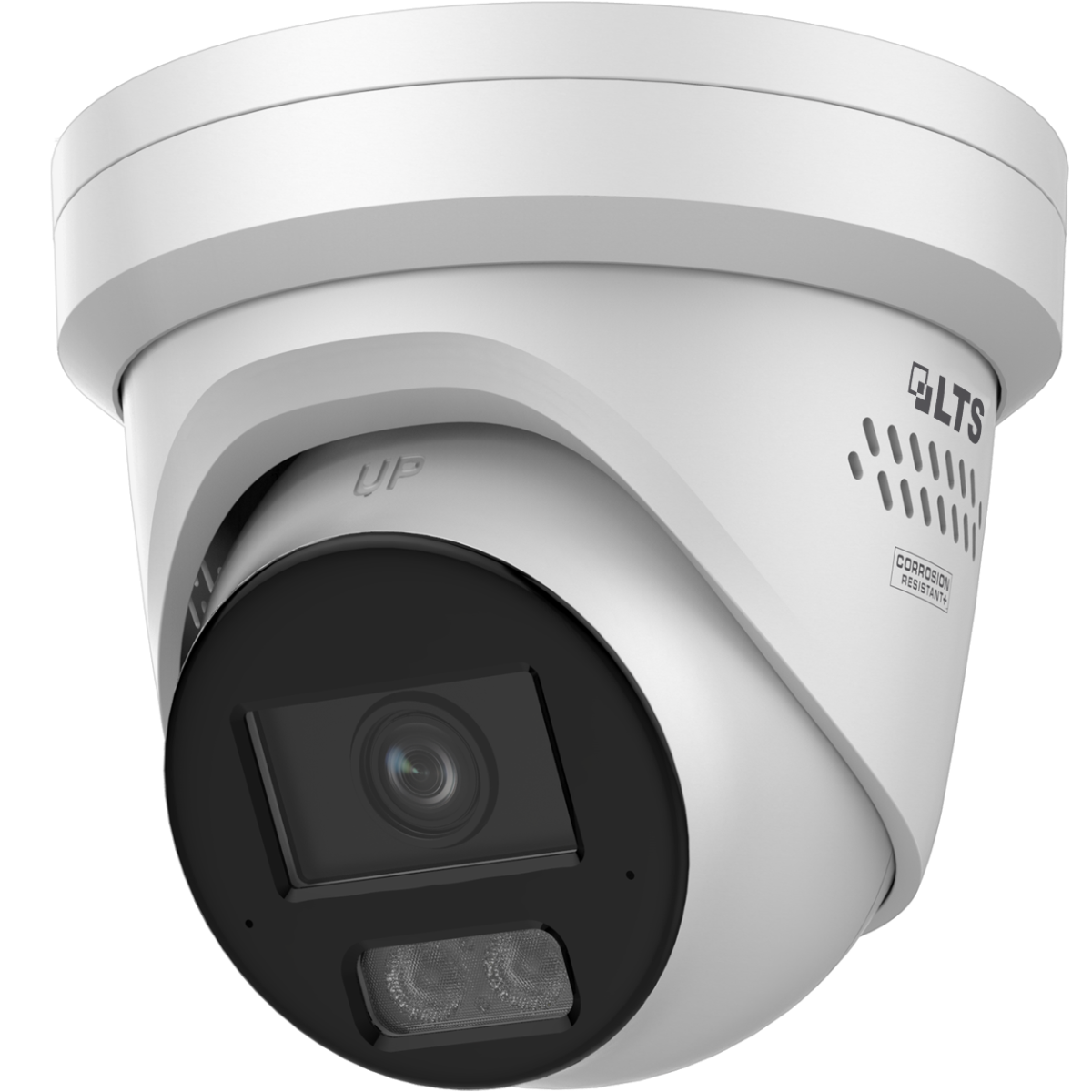
4MP vs. 4K: what resolution actually identifies a face
A 4K (8MP) camera has 3840 × 2160 pixels; a 4MP camera has 2560 × 1440. That is 1.5× more pixels across the image — but whether you can identify a face depends on how many of those pixels fall on it.
Pixels per metre
The IEC 62676-4 standard puts identification of an unknown person at about 250 pixels per metre at the target. To estimate what a camera delivers, divide its horizontal resolution by the width of the scene at the distance you care about.
A worked example
A fixed 2.8 mm lens typically sees about 100° horizontally (check the datasheet for each model). At distance d, that view is roughly 2.4 × d wide.
- 4MP: 2560 ÷ (2.4 × d) ≥ 250 → identification out to about 4.3 m (14 ft).
- 8MP / 4K: 3840 ÷ (2.4 × d) ≥ 250 → identification out to about 6.4 m (21 ft).
Beyond those distances both cameras still show what happened; they just stop being reliable for identifying a stranger.
Other ways to get more pixels on target
- Narrower lens — a 4 mm or varifocal lens trades width for detail.
- Mount closer — a camera aimed at the door from 3 m beats a corner camera 10 m away.
- Light — low light lowers effective detail; full-colour night models and good IR help.
Which to choose
Use 4MP for most doors and indoor rooms where the camera can be close. Choose 8MP / 4K for wide areas, parking and entrances you can only cover from a distance. Compare models in IP cameras using the resolution and lens filters.