PoE vs. Wi-Fi security cameras: which to install
Both kinds of camera send video over a network. The difference is how they get power and how reliably that video arrives.
PoE cameras
A Power over Ethernet camera takes power and data over one network cable from a PoE switch or an NVR with built-in PoE ports. The IEEE 802.3af/at standards allow runs of up to 100 m (328 ft) per cable.
- Reliable video — a wired link is not affected by walls, neighbours’ networks or microwaves.
- One cable — no outlet needed at the camera, so it can go high on a wall or under an eave.
- Central power — put the switch or recorder on a UPS and every camera keeps recording during a short outage.
The trade-off is the cable run itself: drilling, pulling and terminating Cat5e or Cat6.
Wi-Fi cameras
Wireless cameras still need power — from an outlet, a battery or solar — but skip the data cable.
- Quick to put up where pulling cable is impossible or the install is temporary.
- Video quality and recording depend on signal strength; several high-resolution cameras can saturate a home or office network.
- Battery models usually record on motion only, so you get clips rather than continuous footage.
What we recommend
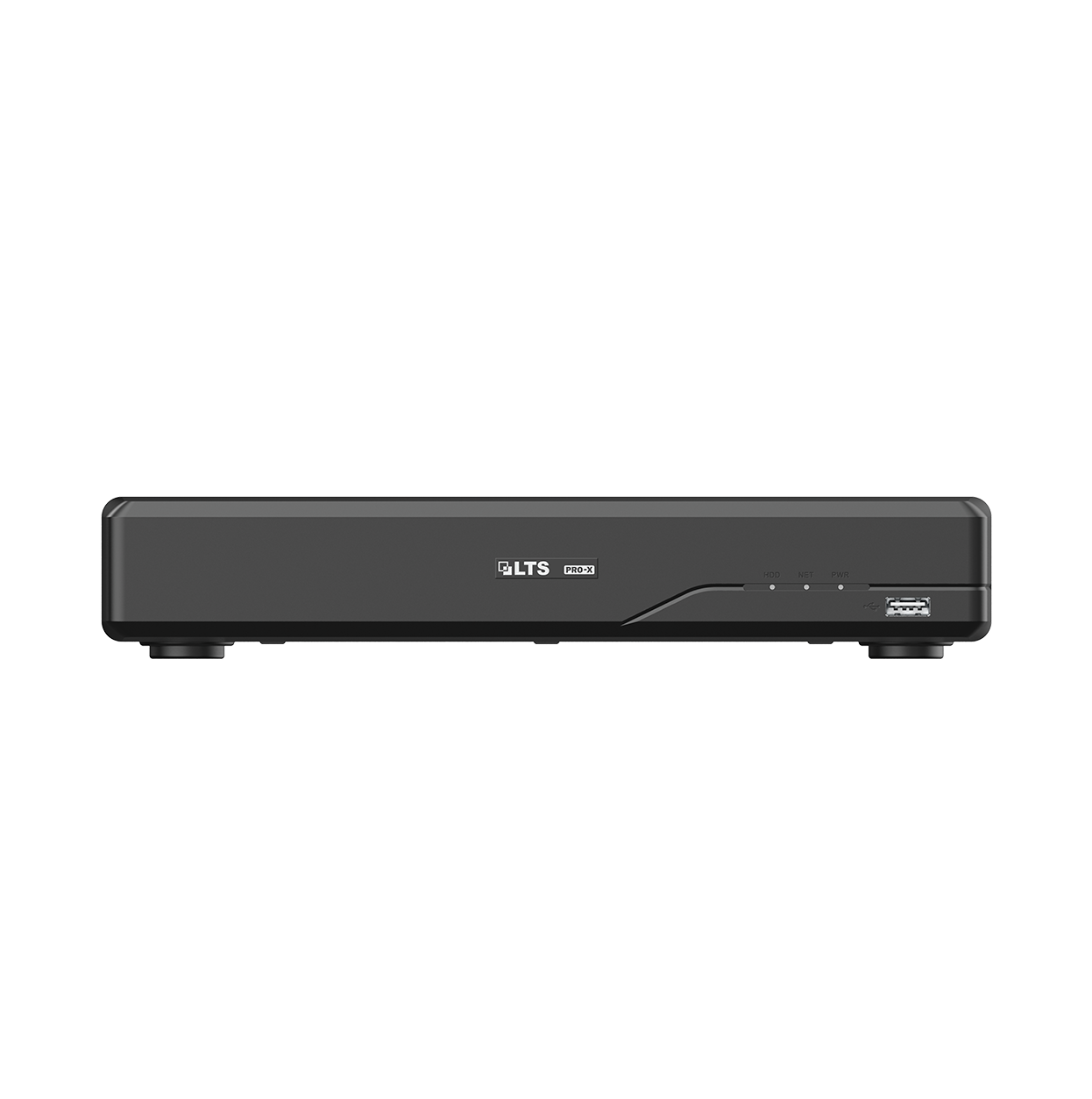
For a business, or any home where footage matters, use PoE wherever you can run cable and keep wireless for the odd spot you cannot reach. Pair PoE IP cameras with an NVR that has built-in PoE ports, or add a PoE switch to an existing network.